Pilot, Not Autopilot: Why AI Can Automate Tasks but Not Accountability

The modern argument about artificial intelligence usually revolves around tasks. People list the jobs that machines might learn to perform and speculate about which industries will disappear first. But this debate overlooks the true boundary of automation. The decisive question is not whether AI can execute a procedure. It is whether AI can carry the burden that makes a procedure meaningful. It is whether it can answer for its actions when things go wrong.
A machine may guide an aircraft, diagnose disease, draft contracts or manage financial flows. It may do these things with astonishing speed and precision. But none of that makes the machine responsible. And responsibility is what distinguishes a profession from an instrument. Once we focus on this, the conversation changes. The fear of complete automation loses its foundation, because the central structure of a working society depends on human beings taking responsibility, something no machine can do.
Responsibility as the Foundation of Work
Every serious profession rests on a willingness to bear consequences. A doctor is not defined solely by medical skill, but by the commitment to stand behind a diagnosis or a surgical decision. A pilot is not merely someone who knows how to operate an aircraft, but someone who accepts the weight of human lives every time the cockpit door closes. An engineer signing off on a bridge, a financier approving a loan, a journalist publishing a name, each takes a risk that cannot be outsourced.
Responsibility requires a form of moral agency. It implies that a decision is owned by someone who can be questioned, judged, praised or punished. Responsibility exists because humans live inside a web of expectations and obligations. A mistake can damage a reputation, trigger legal penalties, or weigh on someone’s conscience for a lifetime. A machine, no matter how advanced, does not participate in this moral field. It produces outputs. It does not bear consequences. It does not understand them, and it cannot be held accountable for them.
Until that changes, and it cannot change, the human role in consequential decisions remains indispensable.
The Case of the Pilot and the Autopilot
Aviation offers the clearest demonstration of this limit. Autopilot systems are extraordinarily capable. They can fly an aircraft more steadily than any human, manage complex navigation, and maintain optimal flight paths with precision. Yet no airline, regulator, insurer or passenger would accept a flight without a pilot in command. The technology is not the issue. The issue is responsibility.
When weather shifts, when systems contradict each other, when something unexpected happens, someone must decide. Someone must be accountable for the judgment. Machines can assist, correct, and even compensate for human error, but they cannot replace the human who carries the responsibility. The pilot’s role is not defined by constant activity, much of the flight is automated, but by the fact that he or she is ultimately answerable for every moment in the air.
This pattern repeats everywhere. A surgeon may rely on robotic precision, but the decision remains hers. A self-driving truck may navigate perfectly under ideal conditions, but the responsibility for the journey lies with the operator or the firm deploying the system. No legal system in the world is prepared to hold a neural network responsible for injury or death. And no society would tolerate such an arrangement.
Why AI Cannot Bear the Weight of Consequences
Responsibility demands more than intelligence. It requires an understanding of consequences in a moral sense. It requires the capacity to weigh competing values, to hesitate, to judge, to justify, and to answer. It demands a place within a human community where trust, blame, credit and liability exist. A machine has none of this. It cannot fear a penalty or reflect on an error. It cannot explain its motives because it has none. It cannot choose one principle over another. It cannot “own” anything, not a decision, not a mistake, and certainly not the consequences.
This is why responsibility cannot be automated. The foundations of human society, law, ethics, social trust, require an accountable person at the center of any consequential action. No matter how advanced AI becomes, this structural requirement remains.
Taking Responsibility Is Work, And AI Cannot Replace It
Many fear that AI will eliminate entire industries. But when we examine how work is structured, a different picture appears. The task is not the job. The responsibility is the job. AI may perform calculations, generate reports, draft documents or analyze data. But the moment a decision carries risk, the responsibility falls back to a human being. And responsibility itself produces roles that do not shrink when technology advances. They expand.
Oversight becomes more important, not less. Judgment becomes more valuable. Verification, auditing, certification, and supervisory decision-making become central professions. With every step toward automation, the need for humans who can stand behind the system becomes greater. The future is not a jobless world. It is a world where work shifts toward the tasks that machines cannot bear, the tasks that require humans to take responsibility, to reason ethically, and to commit to choices whose outcomes matter.
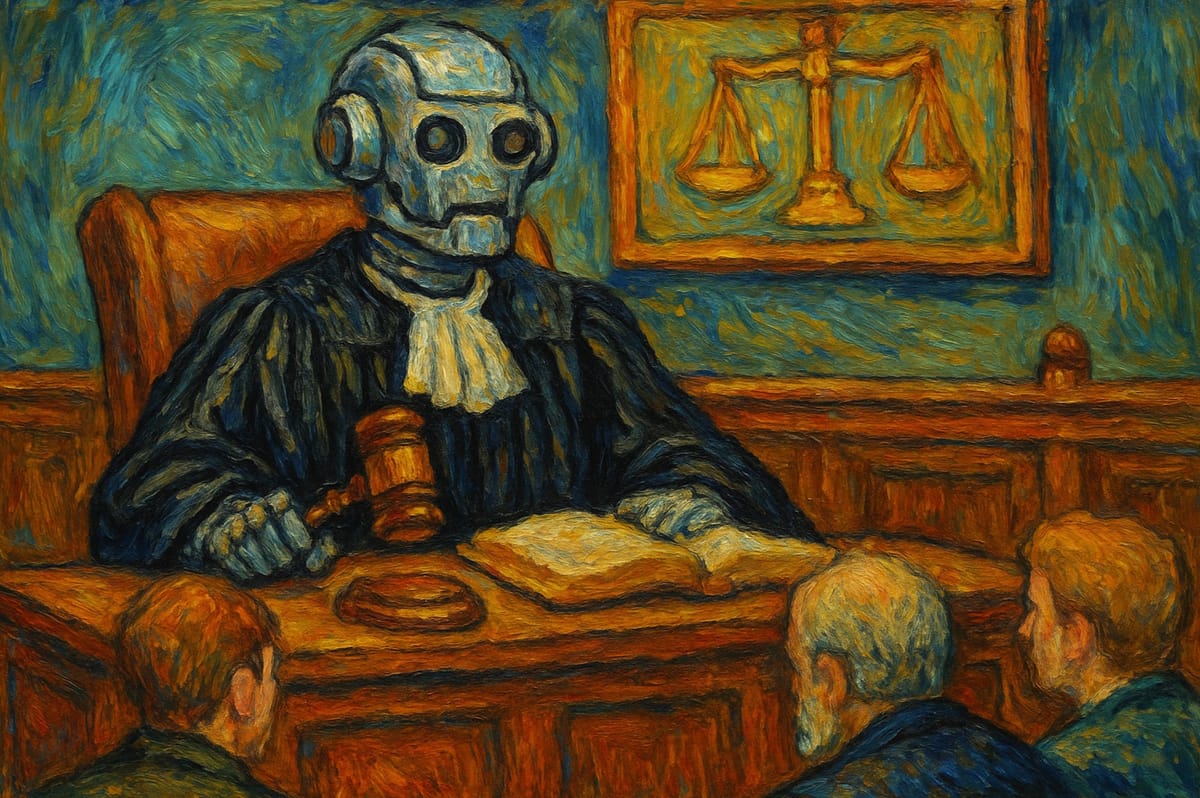
The idea that AI will one day replace most human labor dissolves the moment we ask who is answerable when something goes wrong. If an AI misdiagnoses a patient, someone must answer. If a self-driving system causes an accident, someone must face the law. If an algorithm makes a catastrophic financial decision, someone must explain it. Machines do not stand before courts. They do not apologize. They do not lose their careers. They cannot be trusted with the burden that defines a functioning civilization.
As long as humans exist, responsibility will exist. And as long as responsibility exists, essential human work remains untouched by automation.