If the Dollar Had Remained Honest, Bitcoin Would Never Have Been Born

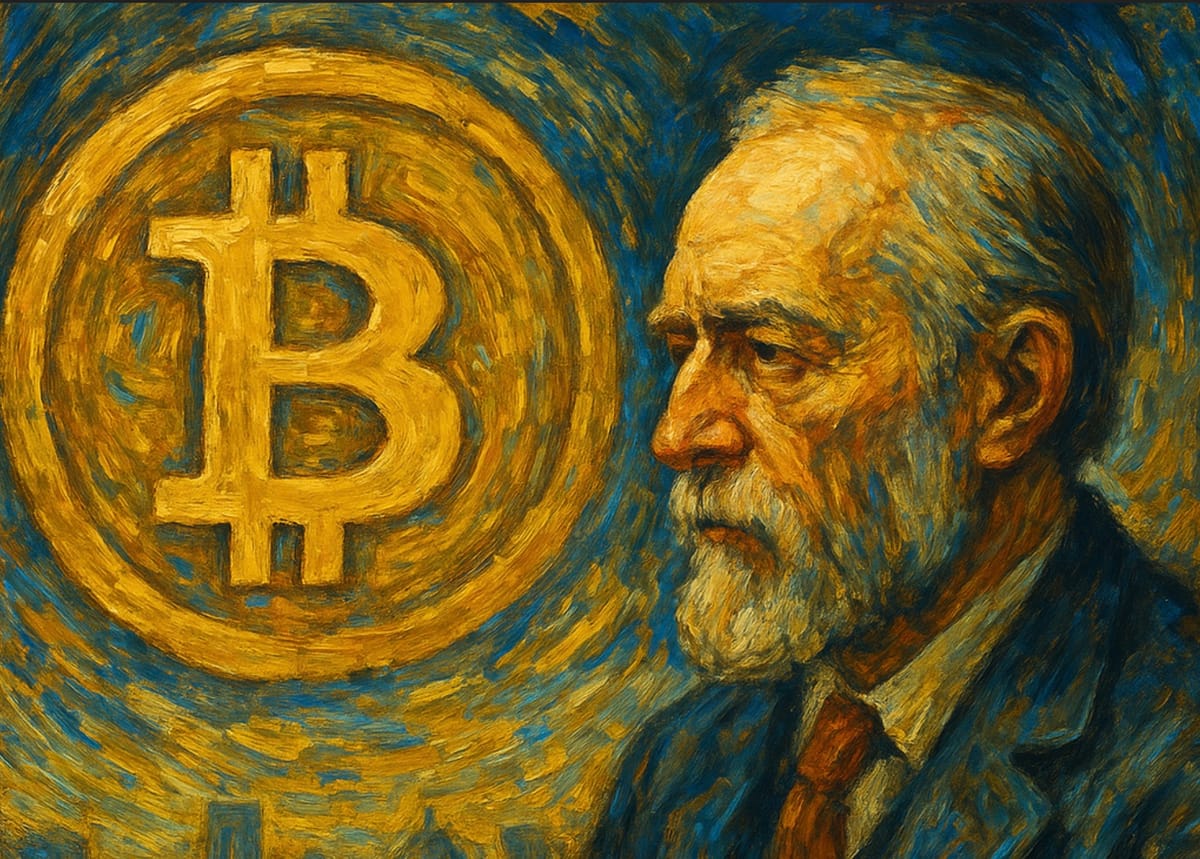
There is a certain irony in the global fascination with Bitcoin. Its admirers speak of it as if it were a sudden revelation, a technological marvel destined to reshape the financial order. But the truth is simpler, older, and far less flattering to our existing institutions. Bitcoin exists only because the U.S. dollar abandoned the very principles that once made it trustworthy.
Had the dollar remained the instrument it was designed to be: stable, restrained, grounded in something beyond political expedience, there would have been no space, no hunger, and no justification for a digital alternative. Bitcoin did not emerge to challenge a healthy monetary system. It emerged because that system failed.
The story of Bitcoin is a story about the decline of the dollar.
The Dollar That Once Needed No Competitor
For most of the twentieth century, the dollar was the anchor of the world economy. It carried a reputation for responsibility, for prudence, for a kind of monetary sobriety. It was not merely paper, it represented a promise that the United States would treat its currency not as a political convenience but as a public trust.
That promise was formalized through convertibility into gold. The discipline of gold convertibility did not make the dollar perfect, but it imposed boundaries. It ensured that creation of new money was tied, however imperfectly, to real constraints.
In that world, the idea of needing a private, cryptographic currency would have seemed unnecessary, even absurd. People trusted the dollar because it behaved in a manner deserving of trust.
But a currency that abandons discipline inevitably invites alternatives.
The Moment the Dollar Lost Its Anchor
The severing of the dollar from gold in 1971 was not merely a monetary technicality. It marked the transformation of the dollar from a restrained instrument into a flexible political tool. From that moment forward, its value depended not on scarcity or convertibility, but on the judgment, or misjudgment, of the state.
This shift did not cause immediate catastrophe. Instead, it created something more insidious, a slow corrosion of confidence. The dollar remained dominant, but its character changed. It became easier to create, easier to manipulate, and easier to dilute. As the decades passed, the link between productive effort and monetary expansion weakened. Inflation became normal. Debt became structural. The currency ceased to be a store of value and became an instrument of policy.
A society can tolerate such changes for a while. But eventually, people begin to feel the consequences in their savings, their wages, and their general sense of economic security.
When the guardians of the currency ignore discipline, the citizen eventually looks elsewhere.
Bitcoin as the Market’s Answer
Bitcoin did not appear as a rival to the dollar at its strongest, it appeared as a response to the dollar at its most compromised. It was not created by governments, banks, or economists. It was created by distrust.
Its appeal lies not in its novelty but in its refusal to behave like the currencies people have grown weary of. Bitcoin does not promise stability through policy, but through limitation. It does not rely on committees, forecasts, or political incentives. Instead, its very structure is a rejection of discretion.
In other words, Bitcoin reenacts what the dollar once embodied, a form of money that cannot be multiplied at will.
It would be misguided to say that Bitcoin replaces the dollar. It fills the void left by the dollar’s abandonment of restraint. It is not a challenge to American power so much as it is an indictment of American monetary policy.
The Need for Bitcoin Is a Symptom, Not a Choice
It is fashionable in some circles to treat Bitcoin as a technological rebellion. In truth, it is a psychological one. It expresses a growing belief that governments have mismanaged the privilege of issuing money. It reflects a quiet but widespread conviction that money should not be infinitely expandable, nor yoked to the needs of political cycles.
Bitcoin is not a superior monetary design, it is a protest against the deterioration of an older one.
If the dollar had preserved the discipline that once defined it, Bitcoin would have remained a curiosity at the fringes of computer science. There would have been no cultural appetite, no economic vacuum, and no emotional need for an independent store of value.
The fact that millions now view Bitcoin as a refuge tells us less about Bitcoin than about what the dollar has become.
Restoring the Dollar Would Shrink Bitcoin Overnight
One could imagine a different timeline. A timeline in which fiscal restraint was maintained, inflation remained rare, and the dollar continued to represent not the ambitions of policymakers but the accumulated trust of generations.
In such a world, Bitcoin would hold little relevance. It could not compete with a currency that embodied stability, responsibility, and self-limitation. No one seeks shelter when the roof is sound. No one searches for alternatives when the primary institution fulfills its purpose.
Bitcoin’s popularity is not a victory. It is a warning.
The Conclusion the Authorities Refuse to Draw
In the end, Bitcoin serves as a mirror held up to the modern monetary order. It does not mock the dollar. It reminds the dollar of what it used to be.
The tragedy is not that Bitcoin exists. The tragedy is that it had to exist.
Until monetary policy returns to honesty, until discipline, restraint, and scarcity are restored, Bitcoin will stand as the quiet rebuke of a world that forgot the very meaning of sound money.